“Development, Production, and Quality Control of Non-halogenated, PFAS Free Flame-Resistant Moisture Barriers”
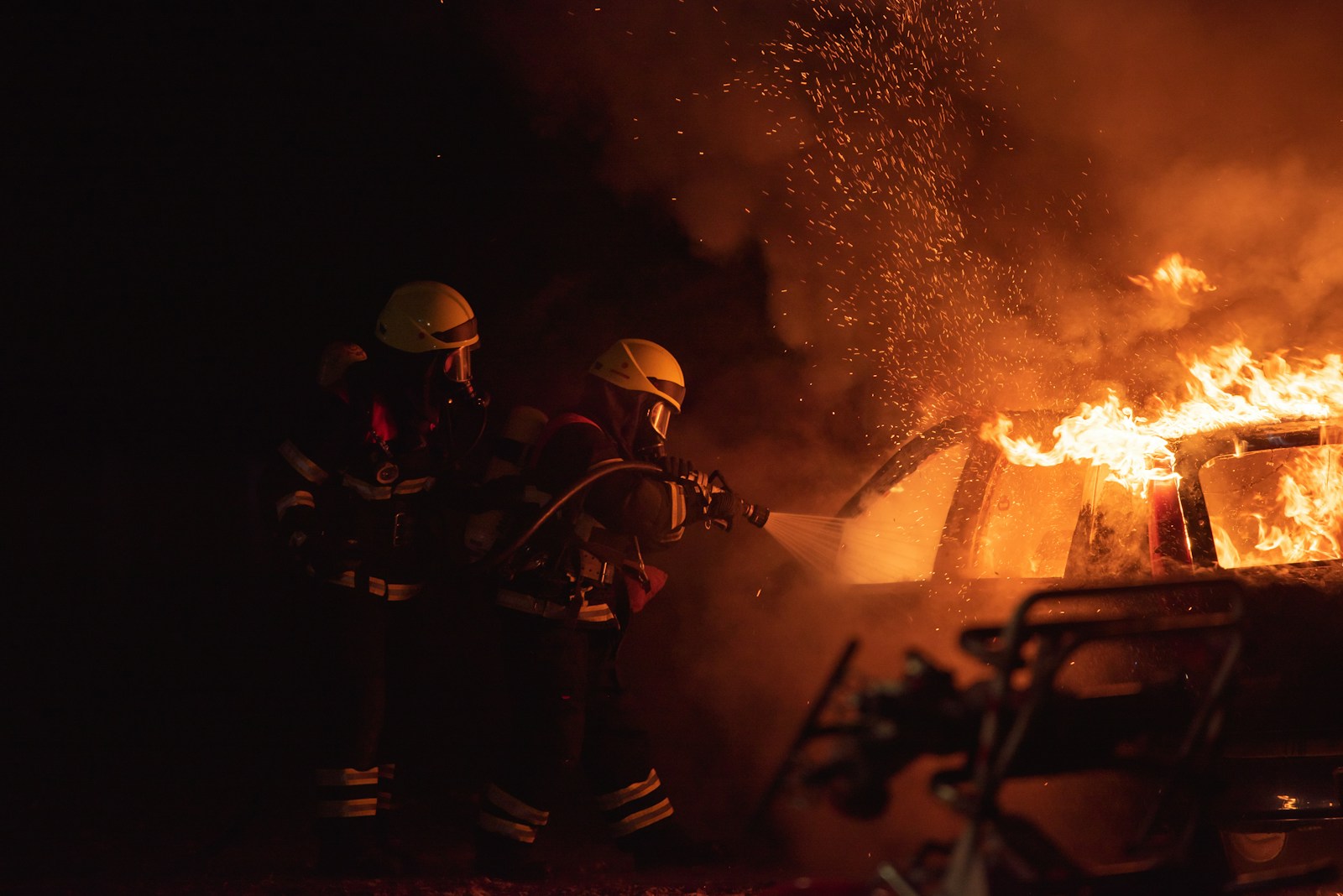
Under the direction of Research Fellow and inventor Dr. Shulong Li, I took part in the development process of Milliken’s newest flame-resistant and fire-retardant fabric system. These protective textiles meet the safety needs of a variety of fire service industries, including structural and wildland firefighters, emergency response personnel, electrical and fossil fuel workers, and even NASA astronauts on the recent Artemis missions.
Skill Development
As a Technical Technician, the following skills have become essential to my daily research and development efforts at Milliken & Company.
Heat, Flame, and Pressure Testing
A large part of Fire Service testing involves live flame and high temperature application. These tests include the Flash Fire Cylinder (FFC), Thermal Protective Performance (TPP), Heat Transfer Performance (HTP), Pyroleg and full-body mannequin burns, Vertical Flame (VF), and thermal degradation resistance. Pressurized tests include static and dynamic hydrostatic pressure resistance and full-spectrum chemical liquid penetration resistance.
Chemical and Elemental Analysis
Protective fabrics are often treated with various chemistries to enhance their performance. To verify proper treatment, chemical analysis is required. Solvent extraction, Fourier Transform – Infrared Spectroscopy (FT-IR), Ultra Violet – Visible Spectroscopy (UV-Vis), Gas Chromatography – Mass Spectrometry/Flame Ion Detection (GC-MS/FID), Nuclear Magnetic Resonance (NMR), and Inductively Coupled Plasma testing (ICP) are our most frequently used analytical methods.